Lifting Equipment Inspection Software
Slings, shackles, hoists, lifting beams, and cranes: thorough examinations and periodic inspections scheduled to the standard each customer works under, certificates from your own template, and a register every customer can log into.
Overview
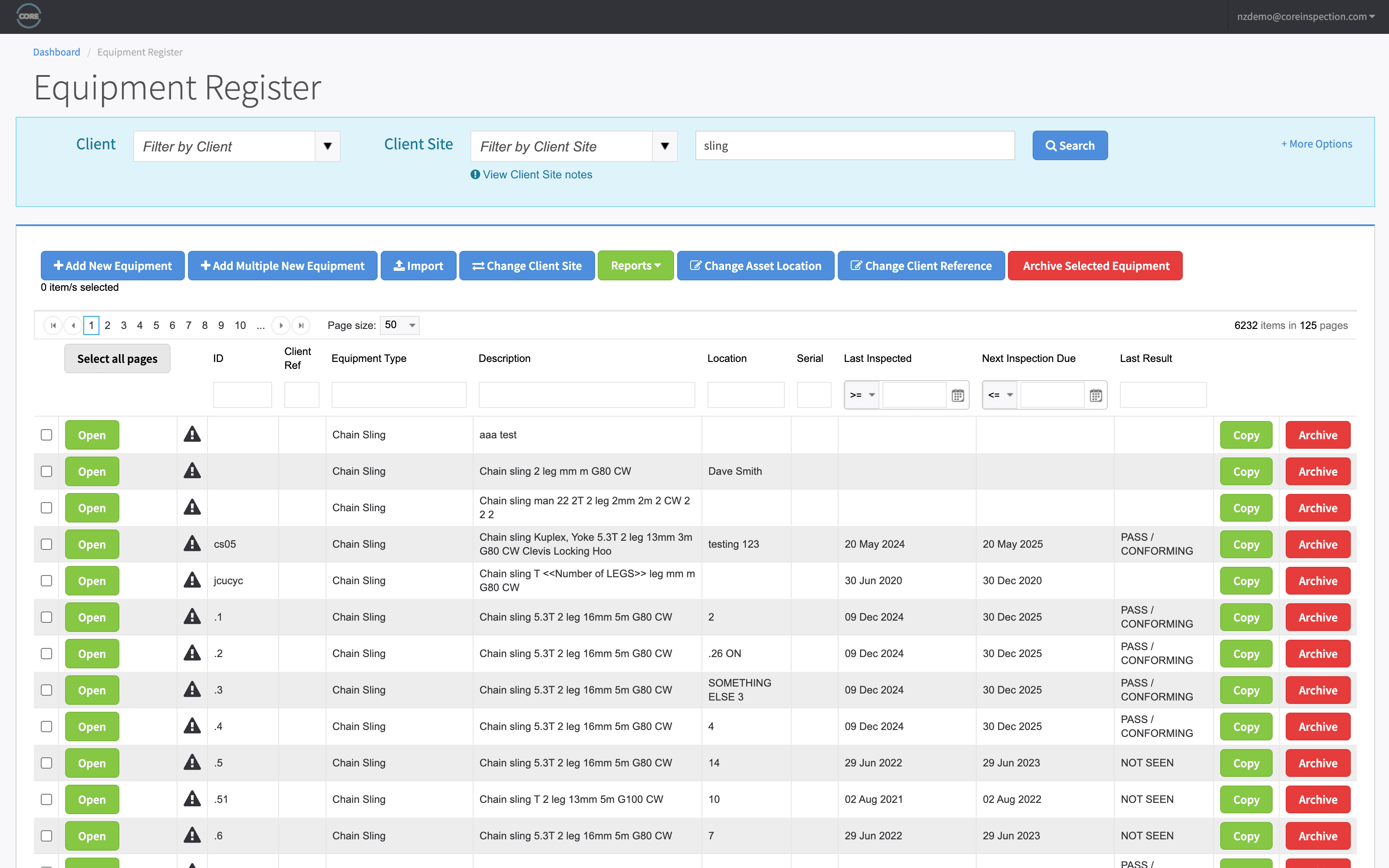
A rigging store generates more inspection volume than anything else you service: two hundred chain slings on one site, each with its own serial, its own due date, and its own history, examined in a day. Core keeps a serialised register of every item across your customers' sites, schedules the six-monthly, annual, or service-class inspection the standard sets, captures the examination on a phone, quarantines what fails, and issues the Report of Thorough Examination or periodic inspection record on approval. The customer sees the result in their own portal the same day.
- Mobile apps for iOS and Android
- Works offline in the field
- Professional PDF certificates
- Customer portal access
What it does
Forms, scheduling, certificates, and the customer portal, in one system.
All Lifting Equipment
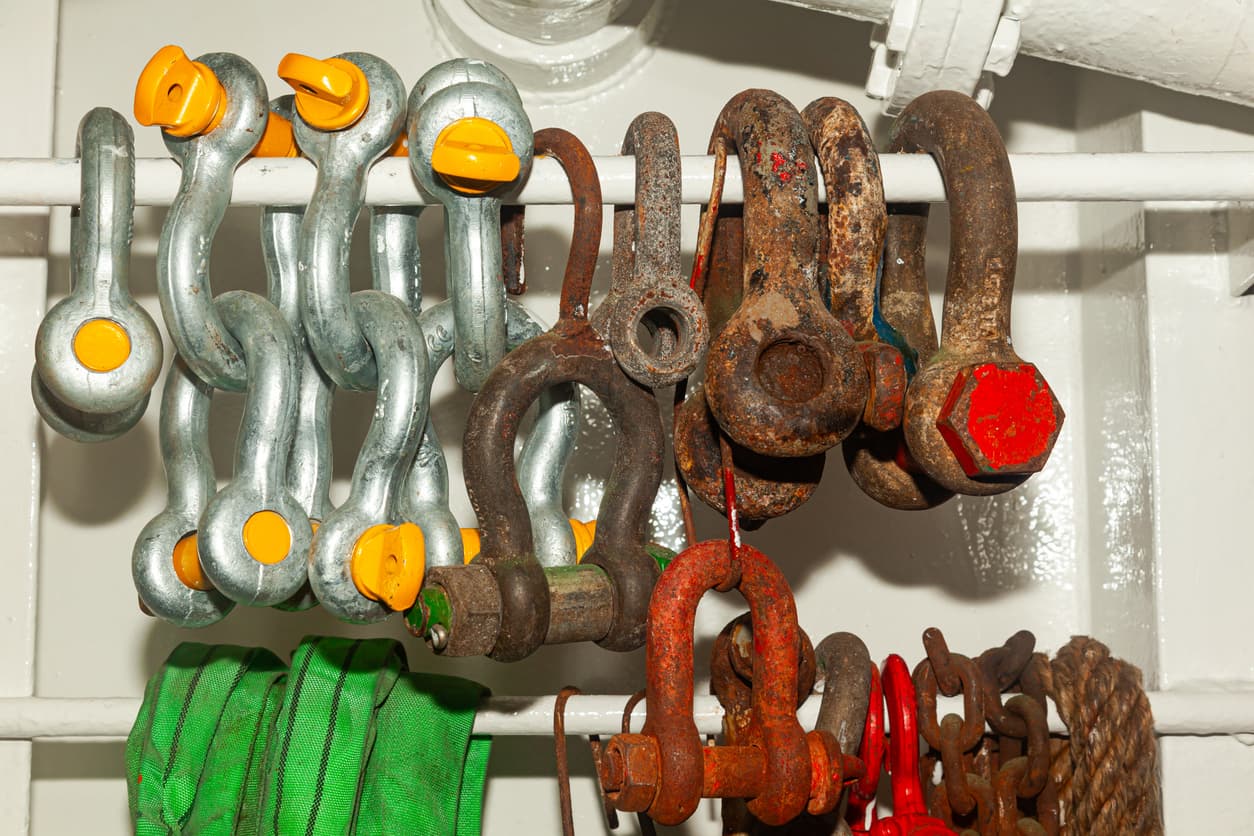
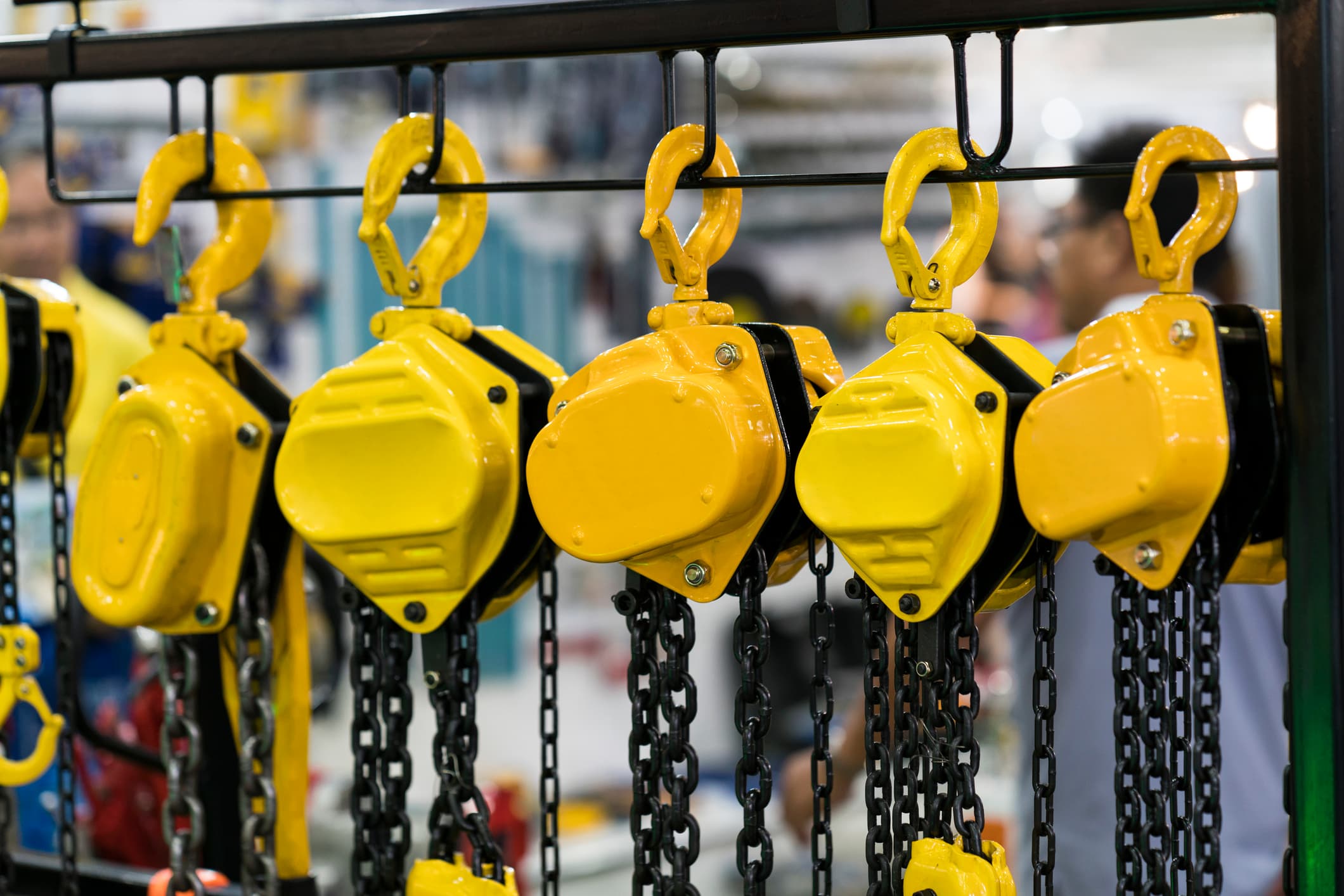
Chain, wire rope, webbing and round slings, shackles, hooks, eyebolts, lifting beams and spreaders, chain and lever hoists, and the cranes they hang from, each as its own equipment type with its own checklist.
Tag Scanning
Every item carries a serial, barcode, QR code, or RFID tag. One scan opens its history, its safe working load, the standard it is examined to, and its next-due date.
Intervals per Standard
Six-monthly LOLER examinations for accessories, annual for other lifting equipment, periodic inspections by ASME service class, and examination schemes that override either, set per equipment type and per customer.
Multi-Inspect Batching
A rack of slings or a bin of shackles captured as one batch: shared details entered once, conforming items passed together, defects opened one at a time with photos.
Quarantine and Defects
A failed examination takes the item out of service, suppresses the certificate, and routes the defect to review. It cannot pass again until a competent person clears it.
Certificates and Registers
Reports of Thorough Examination, periodic inspection records, and site registers from your own DOCX templates, carrying your branding and the examiner's details.
SWL and Colour Codes
Safe working load, proof load, manufacture date, and the current colour code recorded against each item and printed on the certificate and the register.
Customer Portal
Equipment owners log in to their register, certificates, due dates, and quarantined items, under your branding, with no limit on logins.
What lifting equipment inspection software has to do
Every sling, shackle, hoist, and crane is on a clock. In the UK, LOLER puts accessories on a six-month thorough examination and other lifting equipment on twelve. In the US, OSHA wants a look before each day's use and ASME B30 adds periodic inspections at intervals set by service class. In Australia, the sling standards scale the interval to how hard the sling works, and in New Zealand the rigging code of practice caps it at 12 months. Lifting equipment inspection software keeps those clocks per item, puts the right person on each examination, captures the findings and measurements in the field, and produces the record each standard asks for.
For a company that examines other people's lifting gear, the job is wider. The register spans hundreds of customer sites, each with its own rigging store, its own colour code, and its own regime. Each customer wants its certificates the day the examination is done. The examiner on the job has to hold the competency for that class of equipment, and a batch of two hundred slings has to be captured in an afternoon without two hundred forms. Core is built for that business: scheduling, field examination, certificates, client portals, and the billing handoff in one system.
Inspection regimes by standard
Each item in Core carries the inspection regime of the rule it works under, with its own due dates and the record that rule requires.
| Standard | Applies to | Inspections Core schedules | Record produced |
|---|---|---|---|
| LOLER 1998, Regulation 9: lifting accessories | Slings, shackles, hooks, eyebolts, and other accessories (UK) | Thorough examination at least every six months by a competent person, or to a written examination scheme, and before first use unless covered by a declaration of conformity | Report of Thorough Examination with the Schedule 1 particulars, kept until the next report or for two years, whichever is later |
| LOLER 1998, Regulation 9: other lifting equipment | Hoists, cranes, lifting beams, and equipment not used to lift people (UK) | Thorough examination at least every 12 months, six months where the equipment lifts people, or to an examination scheme; after installation where safety depends on it | Report of Thorough Examination; the first-use report kept for as long as you have the equipment |
| OSHA 29 CFR 1910.184 and ASME B30.9 | Alloy chain, wire rope, metal mesh, synthetic web, and roundslings (US) | Inspection each day before use; periodic inspection yearly for normal service, monthly to quarterly for severe service, and at the interval a qualified person sets for special service; alloy steel chain slings thoroughly inspected at least every 12 months under 1910.184 | Written record of the most recent periodic inspection, per sling for alloy chain and metal mesh; no record required for the daily check |
| ASME B30.16 | Hand chain, electric, and air hoists, overhead underhung or stationary (US) | Frequent inspection from daily to monthly and periodic inspection from quarterly to yearly, both set by service class, with the hook inspected to B30.10's criteria | Dated periodic inspection record per hoist; frequent inspections need no record |
| ASME B30.26 | Shackles, turnbuckles, eyebolts, swivel hoist rings, wire rope clips, wedge sockets, links, rings, swivels, and rigging blocks (US) | Initial inspection by a designated person before first use; frequent visual inspection by the user each shift or before use; periodic inspection yearly for normal service, monthly to quarterly for severe service, and at the interval a qualified person sets for special service | No written record required by the standard; Core keeps a dated periodic record against each item anyway, so the hardware shares the sling's history |
| ASME B30.20 with BTH-1 | Lifting beams, spreaders, plate clamps, vacuum and magnet lifters (US) | Inspection before every lift, frequent and periodic inspections at the interval the service level sets, and a load test after manufacture, repair, or alteration | Dated periodic inspection record and the load test record, with the nameplate's design category and service class held on the asset |
| AS 2550.1 | Cranes, hoists, and winches (AU) | Pre-operational checks by the operator, routine inspection and maintenance to the manufacturer's schedule, periodic third-party inspection at a frequency set by the working environment and the severity of use (annual for most cranes), and a major inspection at the end of the design working period | Periodic inspection report and the major inspection record, held against the crane |
| AS 3775.2, AS 1666.2, AS 1353.2, AS 4497 | Chain, wire rope, flat webbing, and round slings (AU) | Visual check by the user before each use; periodic inspection by a competent person at an interval scaled to duty and environment, with AS 3775.2's guide table running from 12-monthly for a chain sling doing a few lifts a week to monthly for heavy use, and Australian suppliers and regulators applying three-monthly inspections to synthetic slings and 12-monthly to wire rope slings | The WLL tag on every sling (maker, grade or size, test certificate number, working load limit); a chain sling without its tag comes out of service until it is proof tested and re-tagged; Core holds the tag data and each periodic inspection against the sling |
| Approved Code of Practice for Load-Lifting Rigging (WorkSafe NZ) | Slings, shackles, hooks, and blocks (NZ) | Visual inspection before and after use; examination by a competent person on a regular basis not exceeding 12 months, shorter depending on the frequency and type of use and the environment; proof loading each year for heavily used tackle; cranes hold a certificate of inspection from an accredited inspection body renewed at intervals not exceeding 12 months | A register of lifting tackle, and no sling used unless its WLL can be read from the tag or its colour; Core is the register, with the examination and proof load records against each item |
| BC OHS Regulation Part 15 and Alberta OHS Code Part 21 | Rigging (CA) | Visual inspection of slings and attachments before use on each shift; slings built to ASME B30.9, which supplies the periodic regime; in British Columbia, chain slings thoroughly inspected at least once each year | British Columbia requires a record of the annual chain sling inspection; fittings marked with the maker, product identification, and WLL; Core holds the markings and the dated inspection |
| DNV-ST-E271 (DNV 2.7-1) | Offshore container lifting sets | Visual examination of the complete lifting set at intervals not exceeding 12 months; NDT or load test of sling components and joining links at intervals not exceeding 48 months | Inspection marked on the container plate, with the lifting set record held against the set |
From work order to certificate
One job carries the schedule, the examination, the certificate, and the invoice line.
- 1
Schedule against competency
Jobs go on a drag-and-drop calendar. Core holds each technician's competencies, so a thorough examination that needs a LOLER competent person, or a periodic inspection that B30.9 assigns to a designated person, can't be booked to someone without the record.
- 2
Inspect in the field
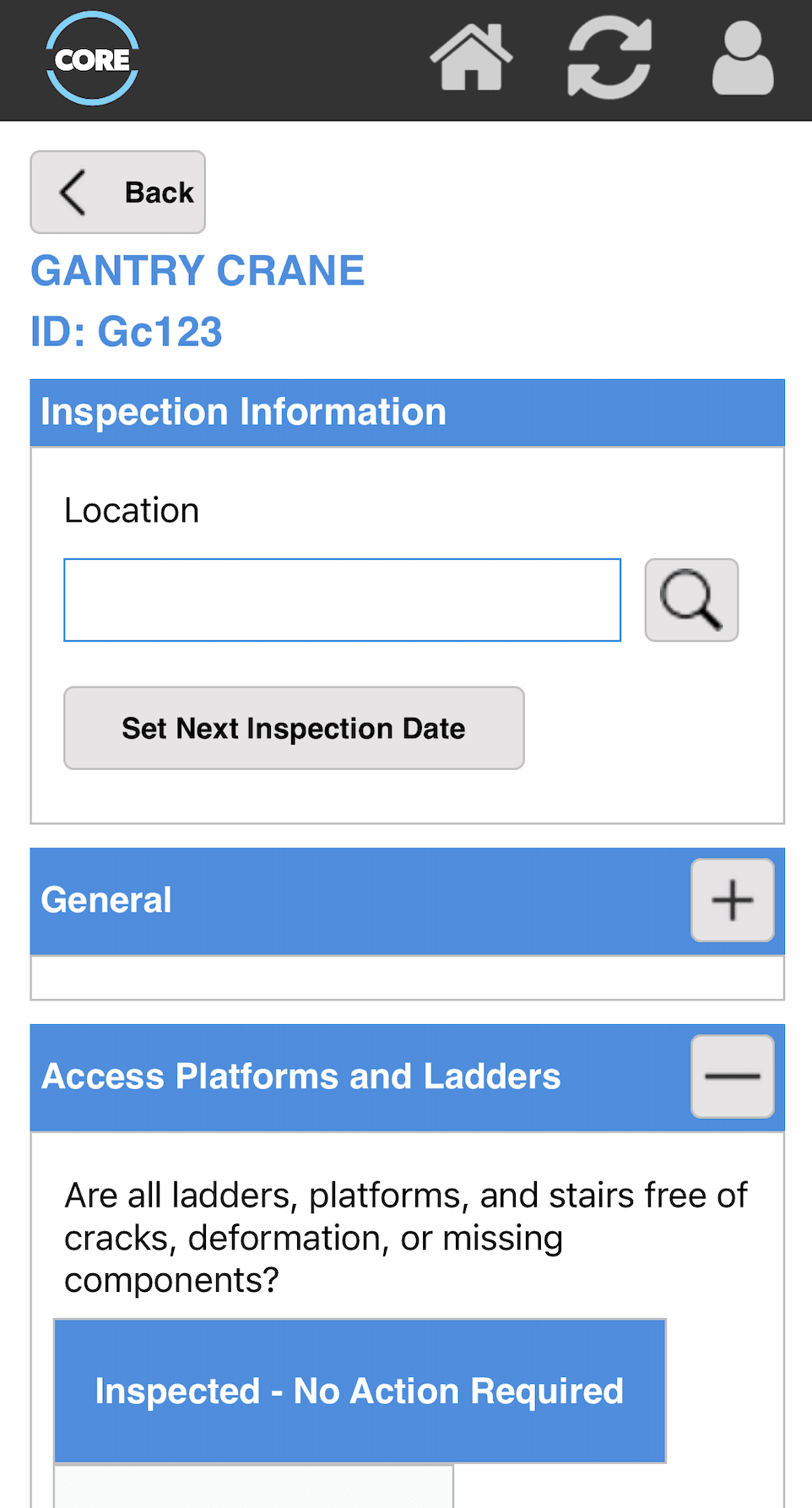
Native iOS and Android apps work fully offline. Technicians scan the tag, run the checklist for that equipment type, take the measurements the standard asks for, photograph defects, and record pass, fail, or quarantine on the device.
- 3
Approve and issue
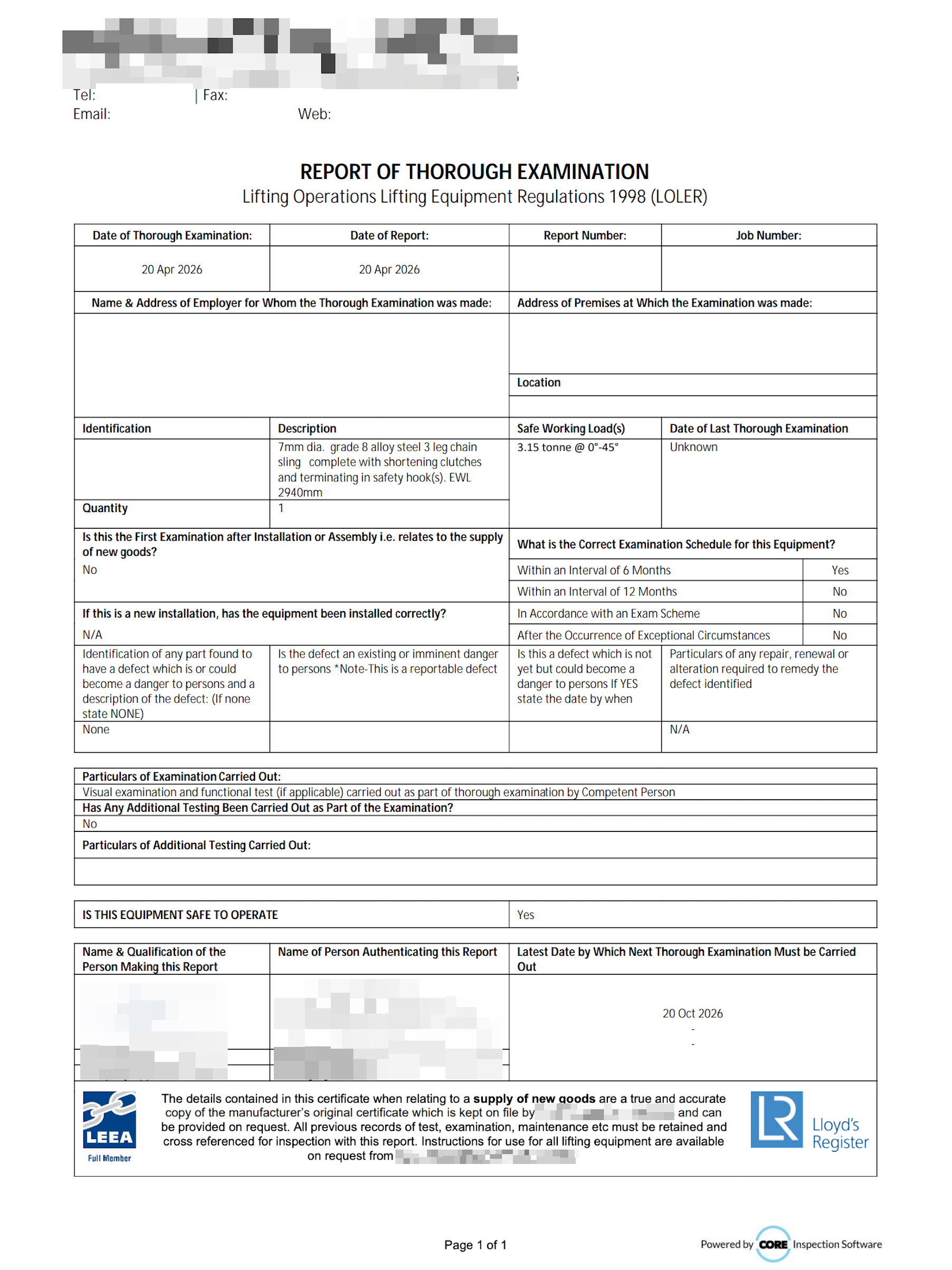
Results pass through your approval stages, then render into your own DOCX template as a Report of Thorough Examination, a periodic inspection record, or a full site register.
- 4
Deliver and bill
Certificates reach the customer's portal as one PDF pack per visit, and the results roll into a per-customer billing summary for your invoicing run.
Three ways an item leaves service, enforced at the point of record
A sling that should be out of service stays out of service, on every site, on every visit.
A failed examination
A defect that is or could become a danger fails the item. Under LOLER Regulation 10 the employer is told forthwith, and where there is an existing or imminent risk of serious personal injury a copy of the report goes to the enforcing authority. In Core a fail quarantines the item, suppresses the certificate, and routes the defect to review.
A missing or illegible tag
ASME B30.9 lists missing or illegible sling identification among its removal criteria, and LOLER Regulation 7 requires lifting equipment to be marked with its safe working load. An item that can't be identified can't be examined. In Core it is quarantined, and its history stays on the asset record so a re-tagged item picks up where it left off.
Wear past the limit
Each standard sets the point where wear becomes a removal criterion: a hook throat opened by more than 15 percent, chain links worn or stretched beyond the manufacturer's limit, broken wires over the count the standard allows per rope lay, cut or abraded webbing. Core's checklists carry the measurement fields, and a reading over the limit fails the item.
Colour codes, safe working loads, and what the tag says
Many sites run a colour code, with a new colour every quarter or every six months, so anyone on the floor can see whether a sling is in date. The colour lives on the item, and the proof lives in the register. Core records the current colour against each item along with its safe working load, proof load, manufacture date, and the standard it is examined to, and prints them on the certificate and the site register.
Where the safe working load varies by configuration, as it does for a multi-leg sling at different included angles, Core holds it per configuration and the examiner confirms it in the field. The same record carries the proof test certificate for a new or repaired chain sling, which OSHA 1910.184 requires the employer to keep and which LOLER's Schedule 1 asks the report to reference under tests carried out.
Two hundred slings in one visit
A lifting equipment visit is rarely one item. It is a rigging store: racks of chain slings, bins of shackles, the hoists on the beams, the spreader in the yard. Multi-inspect captures the lot as one batch. The technician scans each tag, enters the shared details once, passes conforming items in bulk, opens only the ones with defects to measure and photograph them, and issues one certificate pack for the whole visit. The customer's register updates item by item, so a sling that failed at ten in the morning is quarantined in the portal before the technician has left site.
Run a chain sling examination in the interactive demoHow Core compares
Where each option fits, including the ones that fit better than Core.
Spreadsheets and Word templates
Workable for one rigging store. They stop working when six and 12-month clocks run across hundreds of customer sites, every certificate is retyped by hand, and a quarantined sling has to stay quarantined on a site you are not standing on.
Free lifting equipment register templateCheckedOK (CoreRFID)
CoreRFID's inspection platform, sold per engineer alongside its own RFID tags and readers. Core runs on any serial, barcode, QR, or RFID tag, and carries LOLER, AS/NZS, and ASME regimes in the same register.
Core vs CheckedOKMotion Kinetic
The established UK lifting and PUWER platform, sold in discipline packages. Core is one platform across lifting, rigging, cranes, and height safety, with LOLER, AS/NZS, and ASME in the same system.
Core vs Motion KineticLifting equipment inspection guides and templates
The standards behind the software, and free checklists and registers you can use today.
- The LOLER certificate: what the report must contain
- LOLER inspection frequency: the 6 and 12-month rules
- Who counts as a LOLER competent person
- PUWER maintenance vs inspection
- ASME B30.9 sling inspection requirements
- ASME B30.26 rigging hardware inspection requirements
- ASME B30.16 hoist inspection requirements
- ASME B30.20 below-the-hook inspection requirements
- DNV 2.7-1 offshore container and lifting set inspection
- Lifting equipment register template (Excel and PDF)
- Chain sling inspection template
- LOLER Report of Thorough Examination template
- ASME B30.9 sling inspection form
- Hoist inspection checklist (ASME B30.16)
- Below-the-hook inspection record (ASME B30.20)
- Rigging hardware inspection checklist (ASME B30.26)
- Docs: the equipment register in the customer portal
- Lifting equipment management software
“Core has modernised our business and given our customers the oversight of their legal requirements that they were looking for.”
Director, Scotia Handling Services
Read the Scotia Handling Services case studyCompliance Standards We Support
Core's forms, certificates, and approval flows are built around the regimes you work to: LOLER, AS/NZS, ASME and OSHA.
- LOLER 1998 and PUWER 1998, with HSE's Approved Code of Practice L113, UK
- BS EN 818 (short link chain and chain slings), BS EN 1492 (textile slings), BS EN 13414 (wire rope slings), BS EN 13889 (shackles), UK and Europe
- AS 2550.1 (cranes, hoists and winches, safe use) and AS 4991 (lifting devices), Australia
- AS 3775.2 (chain slings), AS 1666.2 (wire rope slings), AS 1353.2 (flat webbing slings), AS 4497 (round slings), AS 2741 (shackles), Australia
- Approved Code of Practice for Load-Lifting Rigging and the Approved Code of Practice for Cranes under the PECPR Regulations 1999, New Zealand
- ASME B30.9 (slings), B30.10 (hooks), B30.16 (overhead hoists), B30.20 (below-the-hook lifting devices), B30.26 (rigging hardware), with OSHA 29 CFR 1910.184 and 1926.251, USA
- CSA B167 (overhead cranes) and Z150 (mobile cranes), with provincial OH&S regulation, Canada
- DNV-ST-E271 (DNV 2.7-1) offshore container lifting sets
Frequently Asked Questions
What is lifting equipment inspection software?
Lifting equipment inspection software holds a serialised register of slings, shackles, hoists, lifting beams, and cranes, schedules each item's thorough examination or periodic inspection at the interval its standard sets, captures the examination on a phone with the measurements the standard asks for, applies the removal-from-service rules, and produces the certificate. For an inspection company it also carries the service side: jobs across many customer sites, examiner competencies, a portal for each customer, and a billing handoff.
How often does lifting equipment have to be inspected?
It depends on the item and the rule it works under. In the UK, LOLER Regulation 9 sets a thorough examination at least every six months for lifting accessories and equipment that lifts people, and at least every 12 months for other lifting equipment, unless a competent person's examination scheme says otherwise. In the US, OSHA 1910.184 requires slings to be inspected each day before use, and ASME B30.9 adds a periodic inspection yearly for normal service and monthly to quarterly for severe service, with hoists on B30.16's service-class intervals. In Australia, the sling standards scale the interval to duty: AS 3775.2's guide runs from 12-monthly for lightly used chain slings to monthly for heavy use, synthetic slings are commonly inspected every three months, and cranes get a periodic third-party inspection under AS 2550.1, annual for most. In New Zealand, the Approved Code of Practice for Load-Lifting Rigging sets a competent-person examination at intervals not exceeding 12 months. Core holds the interval per equipment type and per customer, so each item is scheduled to its own rule.
Is a lifting equipment register the same as inspection software?
No. A register is the list: each item, its identification, its safe working load, its last and next examination. Our free lifting equipment register template gives you one in Excel and PDF. Inspection software keeps that register current from the examinations themselves, schedules the work, captures the findings in the field, produces the certificates, and lets each customer see their own part of it. Companies usually move from the template to software when the register passes a few hundred items or a handful of customer sites.
Can Core produce LOLER Reports of Thorough Examination?
Yes. Core captures the Schedule 1 particulars (employer and premises, equipment identification, date of the last examination, safe working load, the reason for the examination, defects and the date by which repairs are needed, tests carried out, the examination date and the latest date for the next one, and the competent person's details) and renders them into your own DOCX template, so the report looks the way you have always issued it. The report is made on approval and kept against the asset.
Can one register hold customers that work to different standards?
Yes. Intervals, checklists, and certificate templates are set per equipment type and per customer, so a UK customer's chain slings run on a six-month LOLER examination with a Report of Thorough Examination, while a US customer's run on a B30.9 periodic inspection with a written periodic record, on the same register and from the same mobile app. Inspection companies working across the UK, Australia, New Zealand, the US, and Canada run all of their customers in one Core account.
Does Core track colour coding and safe working loads?
Yes. Each item carries its safe working load, proof load where applicable, manufacture date, and the current colour code, and those fields print on the certificate and in the site register. Where the SWL varies by configuration, as with a multi-leg sling at different included angles, it is held per configuration and confirmed by the examiner in the field.
What happens when an item fails?
The item is quarantined, the certificate is suppressed, the defect is logged with photos and the repair required, and the job routes to a review queue. Under LOLER the employer is notified forthwith and, where the defect carries an existing or imminent risk of serious personal injury, a copy of the report goes to the enforcing authority. The item cannot pass again until a competent person records the repair, re-test, or scrapping against it, and the customer sees the quarantine in their portal.
Can I import my existing register?
Yes. Core imports equipment registers in bulk from spreadsheets or an export from your previous system, with the identification, type, SWL, dates, and the customer and site structure mapped during onboarding. Most lifting equipment customers are live in two to four weeks, including the migration, certificate template setup, and team training.
Does Core handle hire equipment?
Yes. The hire module runs hire items separately from the inspection schedule: hire scheduling, utilisation reporting, and revenue tracking per unit, with examinations planned around the hire periods. It matters where hire is a meaningful share of your revenue.
Can my customers see their own register and certificates?
Yes. Every customer gets a portal under your branding, with no limit on logins, showing their equipment register, certificates, upcoming due dates, and quarantined items. They download their own certificates instead of calling your office for them.
Does Core cover cranes and hoists as well as accessories?
Yes. Overhead, mobile, tower, and vehicle-loading cranes, chain and lever hoists, and below-the-hook devices run on the same register with their own checklists and intervals: LOLER's 12-month examination, the ASME B30.2, B30.5, B30.16, and B30.20 inspection classes, and AS 2550 periodic and major inspections. The crane inspection software page has the crane-specific detail.
Free templates & resources
Industry-standard templates and registers: free, editable, ready to brand.
Lifting Equipment Register Template
Excel and PDF register with conditional due-date formatting and audit-ready columns.
View resourceChain Sling Inspection Template
Point-by-point chain sling examination: visual, dimensional, components, in PDF and Word.
View resourceLifting Equipment Management Software
The register, hire, scheduling, portal, and billing side of Core for lifting equipment companies.
View resourceExplore Other Industries
The same platform covers cranes, forklifts, lifting equipment, height safety, and internal inspection programs.
Ready to Get Started?
Book a personalised demo and see how Core runs your inspection workflow, from schedule to certificate.